
Paintwork is one of the most vulnerable and value-defining components of any vehicle. While modern automotive paints are engineered for durability, they remain highly susceptible to mechanical abrasion, chemical contamination, and environmental degradation. Over time, even careful driving and regular washing can introduce surface damage that permanently alters the appearance of a vehicle.
Paint Protection Film (PPF), is a transparent, thermoplastic polyurethane film designed to act as a sacrificial barrier between a vehicle’s paintwork and external stressors. When correctly installed and maintained, PPF plays a measurable role in preserving both cosmetic condition and resale value.
The Science Behind Paint Protection Film
Modern PPF is manufactured using multi-layer polyurethane construction. Each layer serves a specific function:
Top Coat (Elastomeric Layer):
Provides resistance to light scratches and swirl marks. Many films feature self-healing properties, allowing fine scratches to disappear when exposed to heat.Polyurethane Core Layer:
Absorbs and disperses impact energy from stone chips, road debris, and minor abrasions that would otherwise penetrate clear coat and base paint layers.Adhesive Layer:
Engineered to bond securely to automotive clear coat without causing damage upon removal when installed and maintained correctly.
This layered structure allows PPF to take damage that would normally affect paint, preserving the factory finish underneath.
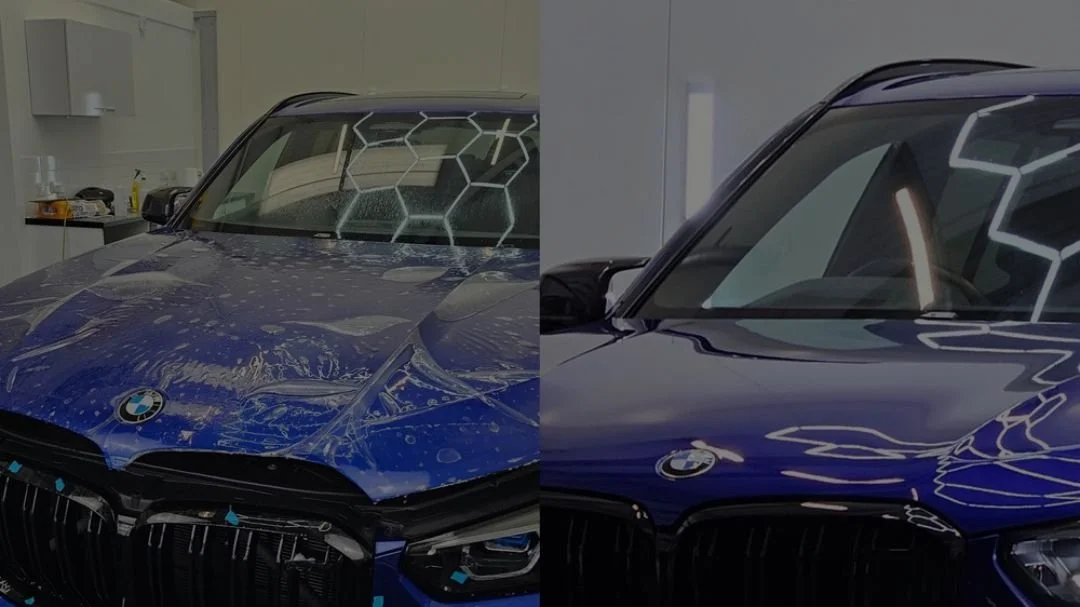
Mechanical Protection vs Cosmetic Enhancement
Unlike ceramic coatings or waxes, PPF provides physical impact resistance, not just chemical protection. Stone chips, gravel strikes, and minor scuffs generate kinetic energy that coatings alone cannot absorb. PPF dissipates this energy across the film’s surface, reducing or eliminating damage to the underlying paint.
From a resale perspective, this distinction is critical. Vehicles protected with PPF typically exhibit:
Fewer stone chips on high-impact zones
Minimal clear coat degradation
Uniform panel condition across the vehicle
This consistency plays a major role during inspections, valuations, and buyer assessments.
High-Risk Impact Zones and Targeted Protection
Technical analysis of wear patterns shows that paint damage is concentrated in predictable areas, including:
Front bumper and bonnet leading edge
Wing mirrors and A-pillars
Door handle recesses
Side skirts and rear arches
Paint Protection Film (PPF) can be installed selectively in these high-impact zones or as a full-body application depending on usage, driving conditions, and ownership goals.
iSparkle Detailing assesses these factors to determine the most effective protection strategy for each vehicle.
Long-Term Degradation Without PPF
Without physical protection, automotive paint is exposed to cumulative damage:
Micro-chipping that penetrates clear coat
UV-induced oxidation and colour fade
Chemical etching from bird droppings and insects
Wash-induced swirl marks
Once clear coat is compromised, restoration typically requires machine polishing or repainting - both of which permanently remove material and reduce factory paint thickness.
PPF prevents this degradation cycle by preserving original paint integrity.
Impact on Resale and Valuation
From a technical valuation standpoint, original paint condition is a major contributor to resale price. Vehicles with factory paint intact, minimal correction history, and uniform surface quality are easier to assess, more attractive to buyers, and often achieve higher valuations.
PPF-protected vehicles frequently require:
Less paint correction prior to sale
No repainting of high-impact areas
Minimal cosmetic reconditioning
This translates directly into reduced preparation costs and stronger buyer confidence.
Professional Installation and Surface Preparation
The effectiveness of Paint Protection Film (PPF) depends heavily on correct installation. Surface preparation typically includes:
Decontamination of paintwork
Removal of bonded particles
Light correction to ensure a defect-free surface
iSparkle Detailing follows controlled installation procedures to ensure correct film alignment, edge wrapping where possible, and long-term adhesion without lifting or distortion.
A Preventative Engineering Solution
Paint Protection Film is not a cosmetic upgrade - it is a preventative engineering solution designed to preserve paint integrity under real-world conditions. By absorbing physical damage, reducing environmental degradation, and maintaining factory paint thickness, PPF plays a critical role in protecting long-term vehicle value.
For owners seeking measurable protection rather than temporary enhancement, professionally installed PPF from iSparkle Detailing offers a technically sound solution that safeguards both appearance and resale potential.